
The Most Expensive Mistake in Software Projects (And Why Teams Miss It)
 Roy LevyJanuary 20264 min readProduct & delivery
Most software projects don't fail because of bad code.
They fail because they solve the wrong problem.
I've worked on projects that shipped—and projects that quietly died. The ones that didn't make it weren't broken. They drifted. Nobody used them.
Over time, I started noticing the same pattern. It shows up early—sometimes before the first commit. It's one of the most expensive mistakes I keep seeing in software projects: not incompetence, but building the wrong product because the problem was never pinned down.
If you're sizing work or a team, the same “clarity before code” idea shows up when you plan a web application build and when timelines slip for reasons that aren't technical.
The mistake doesn't look like a mistake
At first, everything feels like progress.
- Code is being written
- Features are shipping
- The product is taking shape
Nothing looks wrong.
Until later—when you realize something feels off.
A team can move fast in the wrong direction for a very long time.
Building the right solution to the wrong problem
Here's what usually happens.
Someone has an idea. It sounds reasonable. It solves a real issue. So the team starts building.
- The auth system gets built before we know who needs access
- The dashboard gets built before we know what matters
- Features get shipped before we know if they actually help
Everyone involved is smart. Everyone is acting logically.
But they're solving slightly different problems.
To a developer, it might look like a technical challenge. To a user, it might be a workflow issue. To a stakeholder, it might be a misunderstanding.
So you build a solution—but not to the same problem.
Why this becomes expensive
The cost doesn't show up immediately.
- The code works
- Tests pass
- Features ship
Then questions start:
- "Why does it work this way?"
- "Why doesn't it do X?"
- "This isn't what we expected…"
And that's when it clicks: you built the right solution—to the wrong problem.
Now the real cost begins:
- Rework
- Rewrites
- Misalignment
- Lost time
This is a big part of why software projects fail in practice—not dramatic crashes, but slow drift after launch.
When everyone finally agrees
I've seen teams spend months building something that gets rebuilt in weeks—once everyone finally agrees on what they're actually trying to do.
The mistake isn't only "building the wrong thing." It's building anything before everyone involved understands what problem they're trying to solve.
Why this happens
It sounds obvious when you say it out loud.
But in practice, it's hard.
Problems are messy.
A simple request like "we need a way to track orders" can mean completely different things:
- Reporting?
- Customer support?
- Inventory tracking?
Each one leads to a different system.
The technical part is usually straightforward. The hard part is getting everyone to look at the same problem—from the same angle—with the same idea of what success looks like.
How to avoid this mistake
The solution isn't more planning.
It's better understanding.
- Ask obvious questions
- Align on what success looks like
- Make sure different people describe the problem the same way
Don't rush into building until that alignment is real—not just a shared doc nobody reads.
If you're bringing someone in to own delivery, this is also what separates a strong hire from an order-taker: someone who challenges the problem early, not only the stack. Useful context: what to look for when you hire a remote full-stack developer.
FAQ: software project mistakes
Why do software projects fail before the first line of code?
Because teams can commit to a direction while still meaning different things by "the product." The failure looks technical later; the root is misaligned understanding.
What is the most expensive mistake in software development?
Shipping solid code that solves a problem nobody fully agreed on—then paying for rework, politics, and calendar time.
How do you avoid building the wrong product?
Invest in shared clarity before deep build-out: same words for the same problem, explicit success criteria, and resistance to "just start coding" when the ask is still fuzzy.
The most expensive code I've written wasn't complex.
It was code written too early—before the problem was fully understood.
That's the mistake. Not technical. Not process-related. Human.
The most expensive mistake in software projects is building solutions before everyone agrees on what problem is worth solving. Everything else is details.
If you want help pinning the problem before the expensive rework—contact me or see how I work with teams.
Related posts
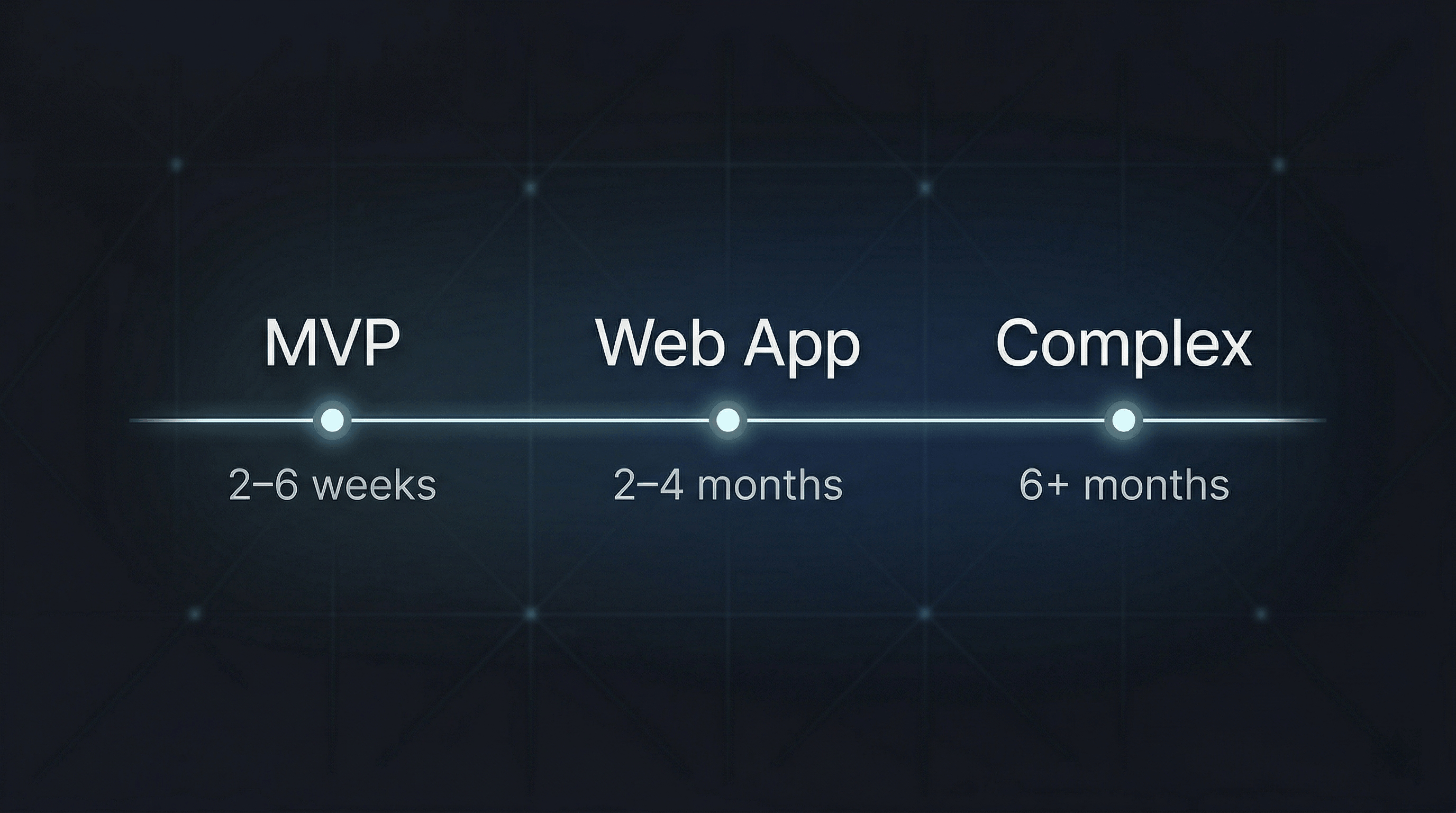
How Long Does It Take to Build a Web Application? (Real Timelines + Hidden Delays Explained)
January 20267 min readReal 2026 timelines: MVPs in weeks, solid web apps in months, complex platforms often 6+. Understand what actually stretches calendars—not typing speed—before you commit months of work.
How to Hire a Remote Full Stack Developer (Without Costly Mistakes)
April 20269 min readRemote hiring fails when scope is fuzzy and proof is thin—vet delivery, communication, and fit before you commit.
5 Mistakes Teams Make When Moving to Next.js (And What Actually Matters)
March 20266 min readTeams move to Next.js expecting SEO and speed fixes—often the friction was never stack-deep. Learn what actually breaks migrations and what fixes them.
Questions about something you read here, or a project you want to move forward? I work with teams on full-stack builds, AWS and serverless consolidation, migrations, and messy systems.
Contact me