
How to Hire a Remote Full Stack Developer (Without Costly Mistakes)
 Roy LevyApril 20269 min readHiring & teams
If you're trying to figure out how to hire a remote full stack developer—or more broadly, how to hire a remote developer for a product that actually has to ship—you're not alone.
More teams work remotely. More products are built by distributed teams. More founders, especially when they need to hire a developer for a startup, are realizing that local hiring is not always the best option.
Hiring someone is easy. Hiring someone who actually helps your product move forward is where most teams get it wrong.
Why hiring a remote full stack developer is so popular today
The shift toward remote-first teams
Over the last few years, remote work stopped being optional for a lot of companies and became the default.
You don't need someone in your office to build great software. You need someone who understands the product, communicates clearly, and actually delivers. That applies whether you're hiring a freelance full stack developer or building a longer-term relationship with a remote web developer who owns outcomes—not tickets.
Cost efficiency vs long-term value
Hiring remotely can reduce costs, but that should not be the main reason to do it.
The real benefit is access: a wider talent pool, more flexibility, and often faster hiring. Cheaper does not always mean better. A weak hire will cost you far more than a strong one ever will.
What a remote full stack developer actually does
Frontend, backend, and system ownership
A full stack developer is not just someone who knows React and Node. They should be able to build user interfaces, design backend systems, connect APIs, and structure the application so it holds together.
The tools give you options. They don't decide how your product should be organized. A framework can suggest folders and patterns. It cannot tell you what should exist, what should be shared, or what you should refuse to build. That's judgment—and it's separate from whether someone lists the same keywords as your job post.
Beyond code: product thinking and delivery
This is where the difference shows up.
A strong developer asks questions, pushes back on unclear requirements, and focuses on shipping usable features. A weak one follows instructions, writes code without context, and creates problems for later.
When you actually need a remote full stack developer
Building an MVP or SaaS product
If you're starting from scratch, a full stack developer can move fast, own the whole system, and reduce coordination overhead compared to splitting everything across many specialists on day one.
Fixing or scaling an existing codebase
This is more common than people think. You might not need someone to build from zero—you need someone to clean things up, simplify architecture, and make the system maintainable again.
What usually goes wrong when hiring a remote developer
Most hiring problems don't come from skill gaps. They come from unclear expectations.
The team is not sure what they're building yet. The requirements keep changing. Ownership is unclear. The developer keeps coding anyway.
A few weeks later: features exist but don't connect well. The code works but is hard to change. Nobody feels confident moving forward.
At that point, the problem is often not the developer. It's that nobody defined what "good" looked like before the work started.
You can hire a remote developer with a strong resume and still end up here—because the job was never defined in a way a human could execute well. The expensive part is not the hourly rate. It's the rework that comes from building against a moving target.
This is usually the point where teams bring in someone external to help reset structure and direction.
Common mistakes when hiring a remote full stack developer
Hiring based on tech stack alone
"Do they know Next.js?" "Do they use TypeScript?" Those questions matter, but they're not the whole story.
I've seen great developers with simple stacks and messy projects built with modern tech. The stack is one signal. Judgment, structure, and delivery matter more. A job post full of frameworks does not replace a clear picture of what you need built—and what you are willing to defer.
If you're specifically dealing with a React or Next.js codebase, the problems tend to show up differently—I've written more about that in my Next.js development approach.
Ignoring communication and ownership
Remote work depends on clarity, updates, and shared expectations. If someone cannot explain what they are doing or why, that becomes expensive quickly—especially for a freelance full stack developer who is supposed to reduce coordination load, not add ambiguity.
Choosing cheap over reliable
Cheap hires often slow things down, introduce bugs, and create rework. You do not save money—you delay progress and pay twice.
What to look for in a great remote developer
Clear thinking and structure
You want someone who organizes code well, makes decisions intentionally, and keeps things simple when simplicity is the right move.
Real-world project experience
Shipping matters more than theory. Look for real products, real users, and evidence of working under real constraints—not only tutorials or certificates.
Ability to ship, not just code
The goal is not code for its own sake. The goal is working software that people actually use.
How to evaluate a remote full stack developer
Questions to ask
- "What would you improve in this project?"
- "How do you structure a new app?"
- "How do you handle messy codebases?"
Listen for specifics. Strong answers usually include tradeoffs, not only buzzwords.
Red flags to watch
Vague answers, overuse of buzzwords, and no clear process for how they work with a team or client are all warning signs.
Cost of hiring a remote full stack developer
Freelancers vs agencies
Freelancers tend to be more direct and flexible, which often suits startups and small teams. Agencies can add structure and bandwidth but usually cost more and sometimes move more slowly. If you're comparing a freelance full stack developer to an agency, ask who actually does the work and how decisions get made—not only the pitch deck.
What affects pricing
Experience, complexity, how much ownership you need, and how much communication and process you expect all move the number. There is no single "right" rate—there is a match between scope and who you hire.
Freelance vs full-time vs agency: what's right for you
It depends on project size, timeline, and what you already have in-house.
Many early-stage teams get the most from an experienced freelancer or a small specialist engagement before they commit to a full-time hire.
How I approach projects as a remote full stack developer
I don't try to make things clever. I try to make them understandable six months later—when you're not in the middle of the project anymore and someone else might need to change what we built.
Most problems I see are not about technology. They're about unclear structure and inconsistent decisions. So the first step is usually not writing more code. It's understanding what should exist, what should not, and what "done" means for the next milestone.
How I start. I ask what you're trying to achieve in the business, not only what feature list you wrote down. If the goal is fuzzy, we slow down until it's sharp enough to build against. Otherwise we're just moving fast in the wrong direction.
How I structure work. I prefer small, shippable slices over big bangs. I keep boundaries clear between parts of the system so changes don't ripple everywhere. I'd rather ship something boring and maintainable than something impressive and fragile—especially for teams that need to hire a remote developer because they don't have time to babysit complexity.
How I communicate. Regular updates in plain language. No hiding behind jargon. If something is blocked or risky, I say so early. If I disagree with a direction, I explain why—then we decide together.
What I don't do. I don't promise unrealistic timelines to win the project. I don't pile on patterns because they're trendy. I don't treat your codebase like a playground for experiments you'll have to live with later.
Most of my work involves cleaning up messy codebases, building scalable apps, and creating internal tools that teams actually use. If you want more detail on scope and how engagements work, you can read about how I approach full-stack web development—that's the service page I point serious inquiries to when they're past the "just browsing" stage.
FAQ: hiring a remote full stack developer
How long does it take to hire a remote developer?
Usually between a few days and a few weeks, depending on how clear your requirements are and how fast your process moves.
Should I hire freelance or full-time?
Freelance is often better when you need flexibility and a faster start. Full-time makes sense when you have ongoing product work that justifies a permanent role.
What skills matter most?
Problem-solving, communication, and a track record of delivery usually beat a long list of frameworks.
How do I know if someone is good?
Look at real projects and how they explain decisions—not only what they claim on a resume.
Can a full stack developer build everything?
They can own a lot of typical web product work, but scope and complexity still matter. Very large teams or specialized domains may need additional roles.
What's the biggest hiring mistake?
Moving too fast without understanding what you need, which stack is actually required, and what success looks like in the first months.
Final thoughts
Learning how to hire a remote full stack developer is less about technology and more about judgment.
The best developers simplify problems, communicate clearly, and help you move forward. Focus on clarity over hype, experience over buzzwords, and outcomes over raw code volume.
If you're trying to hire a remote full stack developer and want someone who can bring structure—not just code—that's the kind of work I do.
Related posts
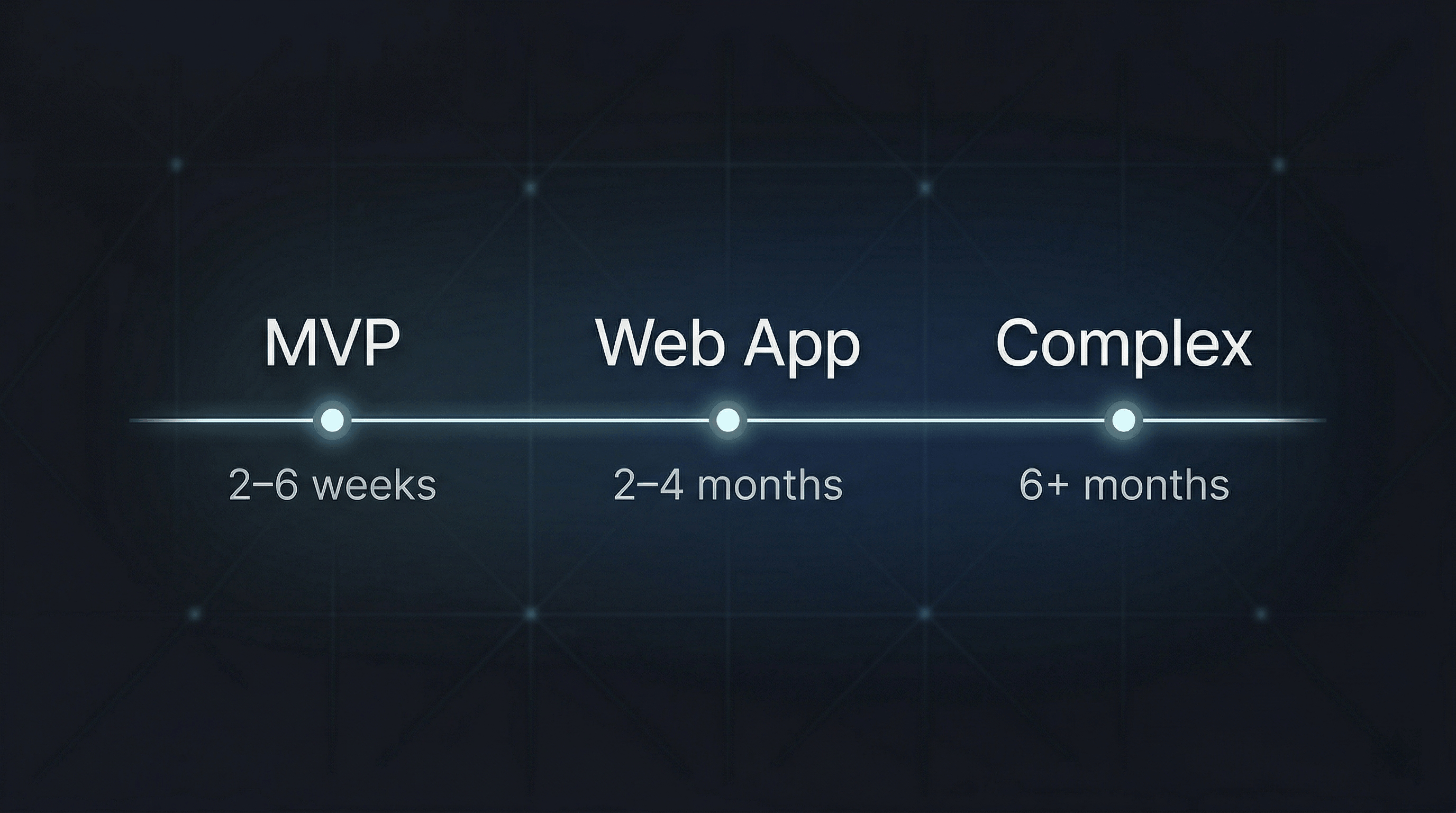
How Long Does It Take to Build a Web Application? (Real Timelines + Hidden Delays Explained)
January 20267 min readReal 2026 timelines: MVPs in weeks, solid web apps in months, complex platforms often 6+. Understand what actually stretches calendars—not typing speed—before you commit months of work.
The Most Expensive Mistake in Software Projects (And Why Teams Miss It)
January 20264 min readTeams ship working code that misses the real problem—then pay for rework, politics, and lost months. Align on the problem before you pour concrete into code.
5 Mistakes Teams Make When Moving to Next.js (And What Actually Matters)
March 20266 min readTeams move to Next.js expecting SEO and speed fixes—often the friction was never stack-deep. Learn what actually breaks migrations and what fixes them.
Questions about something you read here, or a project you want to move forward? I work with teams on full-stack builds, AWS and serverless consolidation, migrations, and messy systems.
Contact me